Wandering Through Time: Damascus’ Soul Lives in Its Streets
Walking through Damascus feels like stepping into a living storybook—one where every stone whispers history. I didn’t just visit; I wandered, observed, and absorbed. The city’s landmark buildings aren’t just structures—they’re guardians of centuries. From ancient souqs to age-old mosques, each site carries weight, beauty, and resilience. This isn’t just travel—it’s connection. And what I discovered changed how I see heritage forever.
First Impressions: Entering the Ancient Heart of Damascus
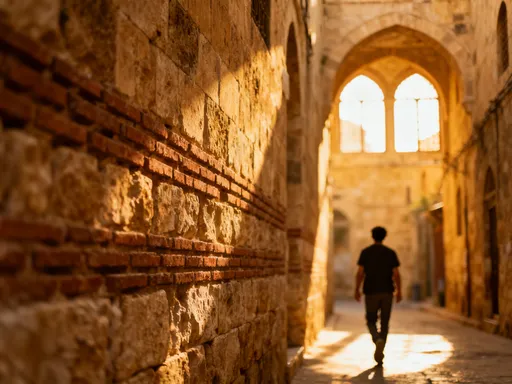
Arriving in Damascus is not like entering most modern cities. There are no towering glass facades or sprawling highways leading into the core. Instead, the approach to the Old City feels like a slow unveiling. Passing through Bab Sharqi, the ancient Eastern Gate, is like crossing a threshold not only in space but in time. The archway, worn smooth by centuries of footsteps, frames the first view of narrow alleyways that twist like veins through the historic heart. The moment one steps beneath it, the rhythm of the city shifts. The hum of daily life—vendors calling out, the distant echo of the call to prayer, the clatter of copper being shaped in hidden workshops—fills the air with a sense of continuity.
The sensory experience is immediate and layered. The scent of cumin, dried mint, and cardamom drifts from open sacks in small stalls. Sunlight filters unevenly through overhanging wooden balconies, casting dappled patterns on stone paths worn concave by generations. The buildings, though bearing cracks and patches of weathered plaster, are far from abandoned. Laundry hangs from upper windows; children dart between doorways; elders sip tea in shaded corners, watching the flow with quiet familiarity. This is not a preserved relic behind glass—it is a city that lives, breathes, and adapts.
What strikes most is how decay and vitality coexist so naturally. A crumbling wall may support a flowering vine; a centuries-old doorway may lead to a functioning home or shop. There’s no attempt to erase the marks of time—instead, they are integrated into the city’s identity. Damascus does not feel frozen in the past. It feels timeless because its people continue to inhabit history, not as performers in a historical reenactment, but as residents of a deeply rooted urban tradition. The city’s authenticity lies in this seamless blend—where the ancient is not separate from the present, but foundational to it.
The Umayyad Mosque: Where Architecture Meets Devotion
At the center of Damascus stands the Umayyad Mosque, a monument whose significance transcends architecture. Built on a site revered for millennia—once home to a Aramaean temple, later a Christian basilica dedicated to John the Baptist—the mosque embodies layers of spiritual heritage. Completed in the early 8th century under Caliph Al-Walid I, it remains one of the oldest and most important mosques in the Islamic world. Its grand courtyard, paved in stone and bordered by graceful arcades, opens to a sky that seems to pause above it. The atmosphere is one of profound stillness, even amid the presence of visitors and worshippers.
The architectural details speak of both ambition and harmony. The prayer hall, with its rows of columns and horseshoe arches, channels light in soft waves, creating a meditative glow. The mihrab, intricately adorned with Byzantine mosaics depicting lush gardens and flowing water, suggests paradise on earth. Three minarets rise at different corners—each added in different centuries, reflecting the evolving history of Islamic rule. The Minaret of Jesus, so named for the belief that he will descend here at the end of times, stands as a bridge between faiths, a quiet testament to shared prophetic traditions.
What makes the Umayyad Mosque truly powerful is not just its scale or beauty, but the way it functions as a living spiritual space. During prayer times, the courtyard fills with rows of worshippers in quiet devotion. At other hours, visitors walk with hushed respect, pausing to gaze at the mosaics or sit on the shaded benches. There is no sense of division between tourist and pilgrim—both are drawn to the same sense of awe. The mosque does not demand reverence through grandeur alone; it invites it through serenity. It is a place where architecture serves devotion, and where history is not merely remembered but practiced.
For many who come here, the experience is transformative. One does not simply admire the Umayyad Mosque; one feels its weight. It stands as a symbol of endurance, having survived fires, conquests, and the passage of over thirteen centuries. Yet it remains open, active, and deeply integrated into the life of the city. In a world where religious sites are often politicized or isolated, the Umayyad Mosque offers a rare model of coexistence and continuity.
The Old City’s Hidden Courtyards: Homes That Breathe History
Beyond the grand monuments, Damascus reveals another layer of heritage in its traditional homes. Tucked behind unassuming stone doorways, these houses open into inner courtyards—private oases of calm and craftsmanship. Known as Damascene courtyard houses, they follow a design refined over centuries, responding to the region’s climate and social values. The courtyard, often centered around a fountain or small garden, serves as the heart of the home, providing light, ventilation, and a space for family life. Surrounding it are rooms arranged over one or two levels, connected by wooden galleries with intricately carved railings.
One of the most distinctive features is the mashrabiya—a projecting wooden window with latticework that allows residents to observe the street while maintaining privacy. These delicate screens, often made from turned wood, filter sunlight and create ever-changing patterns on interior walls. The craftsmanship reflects a deep understanding of both aesthetics and function. In summer, the courtyard’s fountain cools the air; in winter, the thick stone walls retain warmth. These homes were not built for show, but for living—intelligent, sustainable, and deeply human in scale.
Today, many of these houses have been restored and repurposed. Some serve as guesthouses, offering travelers a rare opportunity to stay within the historic fabric. Others house cultural centers, artisan workshops, or small museums. Walking through one, one feels the care taken to preserve original features—hand-painted ceilings, marble fountains, and restored tilework—while adapting spaces for modern use. These restorations are not about creating museum pieces; they are about keeping tradition alive through use.
What makes these homes significant is their quiet resilience. While the world outside changes rapidly, these courtyards remain sanctuaries of balance and beauty. They remind us that heritage is not only in monuments, but in the way people live. The families who still inhabit such homes, or those who choose to restore them, do so not for tourism alone, but out of a deep connection to place and identity. In a city that has endured so much, these private spaces stand as acts of quiet resistance—a refusal to let history be erased by time or conflict.
Straight Street (Via Recta): Walking a Biblical and Roman Legacy
One of the oldest streets in the world, Straight Street—known in ancient times as the Via Recta—runs east to west through the heart of the Old City. Mentioned in the New Testament as the place where Saint Paul was healed and baptized, it has carried spiritual significance for centuries. But its origins are even older, dating back to the Roman period when Damascus was part of the Roman Empire. The street was designed as a colonnaded thoroughfare, a hallmark of Roman urban planning, and though much of the original structure has changed, its alignment remains remarkably intact.
Today, Straight Street is not a grand avenue, but a lively, unassuming corridor lined with small shops and workshops. Sunlight streams through gaps in the partial roofing overhead, illuminating displays of spices, textiles, and handcrafted goods. The atmosphere is one of steady, unhurried commerce. Tailors sit at sewing machines; spice vendors weigh cumin and sumac in paper cones; tea is poured in small glasses at corner stalls. There are no crowds of tourists marching in formation, no loud announcements or souvenir hawkers. The experience is intimate, authentic, and deeply local.
What is remarkable is how history here is not performed—it is lived. A Christian pilgrim may pause at the site believed to be Saint Paul’s baptismal house, while a Muslim shopkeeper arranges bolts of fabric nearby. There is no tension in this coexistence; it is simply the way of the city. The layers of history are not separated into exhibits or timelines—they are woven into the daily rhythm. A Roman road becomes a market street; a biblical site becomes part of a neighborhood.
Walking Straight Street is to understand that heritage is not always dramatic. Sometimes, it is the persistence of a path, the continuity of foot traffic over two thousand years. The street does not shout its importance; it whispers it through its endurance. It reminds us that the most powerful legacies are not always the most visible—they are the ones that survive quietly, embedded in the routines of ordinary life.
The Citadel of Damascus: A View from the Edge of Power
Rising on a hill overlooking the Old City, the Citadel of Damascus stands as a reminder of the city’s strategic importance through the ages. Originally built in the Ayyubid period under Sultan Al-Adil in the early 13th century, it was designed as a military fortress to protect Damascus from Crusader invasions. Though smaller and less intact than other regional citadels, its location offered commanding views of the surrounding area, allowing early detection of approaching forces. The thick walls, round towers, and remnants of barracks and storage rooms speak of a time when defense was paramount.
Today, the citadel is in partial ruin, with only fragments of its original structure still standing. The entrance gate, though weathered, retains its imposing arch, and the remains of towers offer panoramic views of the city’s rooftops, minarets, and distant hills. From this vantage point, one can trace the spread of the Old City, the winding course of the Barada River, and the modern neighborhoods that now surround it. It is a view that spans centuries—a silent witness to the city’s evolution.
Unlike more restored fortresses in the region, the Citadel of Damascus has not undergone extensive reconstruction. This lack of full restoration, while sometimes seen as neglect, also preserves a sense of authenticity. The ruins are not polished or dramatized; they are allowed to age naturally. Graffiti from past soldiers, cracks in the stone, and patches of vegetation growing between bricks all add to the sense of layered history. There is dignity in its quiet state, a reminder that not all heritage needs to be revived to be meaningful.
The citadel’s current state reflects a broader truth about Damascus: resilience is not always about perfection. It is about presence. Though no longer a seat of power, the citadel remains a symbol of endurance. It has withstood sieges, earthquakes, and the slow erosion of time. And even in its partial form, it continues to offer perspective—both literal and metaphorical. Standing within its walls, one feels the weight of history not as a burden, but as a quiet strength.
Souq Al-Hamidiyah: More Than a Market—An Urban Cathedral
If the Umayyad Mosque is the city’s spiritual center, then Souq Al-Hamidiyah is its economic and social heart. Stretching from the western entrance of the Old City toward the mosque, this covered bazaar is crowned by a dramatic iron vault that spans its entire length. Built in the late 19th century during Ottoman rule, the arcade protects shoppers from sun and rain while allowing diffused light to filter through. The effect is cathedral-like—long, arched, and reverent in scale. The sound of footsteps, haggling, and the clinking of metalwork echoes beneath the roof, creating a symphony of urban life.
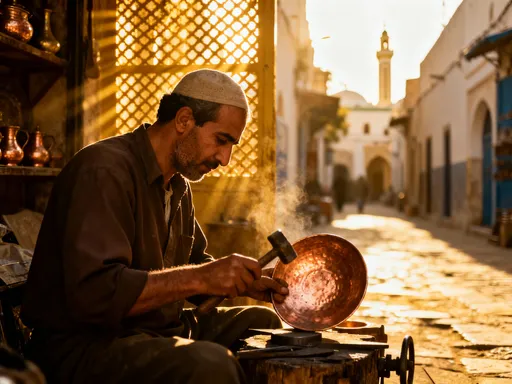
The souq is organized into specialized sections: one for spices, another for textiles, others for metalwork, perfumes, and sweets. Walking through it, one is drawn by color and scent—the deep red of Aleppo soap, the golden glow of saffron, the rich aroma of roasted coffee beans. Vendors sit behind counters piled high with goods, many of them third or fourth generation in the same family trade. A copper worker hammers a tray with rhythmic precision; a spice seller offers samples on small spoons; a tailor adjusts a hand-stitched garment. Each stall is a small world of its own, rooted in tradition but responsive to the present.
What makes Souq Al-Hamidiyah more than just a marketplace is its role as a communal space. It is where people meet, exchange news, and conduct both business and friendship. Elderly men gather at tea stalls for long conversations; families shop together on weekends; artisans teach apprentices the details of their craft. The souq is not just about commerce—it is about continuity. The skills, relationships, and rhythms passed down through generations are as valuable as the goods themselves.
Yet the souq also faces challenges. Economic pressures, shifting trade patterns, and the impact of regional instability have affected foot traffic and livelihoods. Some shops remain closed; others adapt by selling to a smaller, more local clientele. Preservation efforts exist, but they must balance authenticity with sustainability. The goal is not to turn the souq into a tourist attraction, but to ensure it remains a living, working space. Because its true value lies not in its architecture alone, but in the life it supports.
Why These Buildings Matter: Heritage as a Living Thread
Damascus stands at a crossroads—not just geographically, but culturally and historically. Its landmark buildings are not isolated attractions; they are threads in a living fabric that has endured for millennia. In a region marked by upheaval, the city’s ability to maintain its architectural and social continuity is nothing short of remarkable. These structures are not preserved behind velvet ropes; they are used, inhabited, and respected as part of daily life. A mosque is not just visited—it is prayed in. A courtyard house is not just admired—it is lived in. A market is not just toured—it is shopped in.
This continuity is a quiet act of resistance. It says that culture cannot be erased by conflict, that identity is carried in stone and memory alike. The people of Damascus do not treat their heritage as something fragile to be locked away. They treat it as something strong enough to bear the weight of everyday life. There is pride in this—not boastful, but deep and steady. It is the pride of those who know they are part of something greater than themselves.
For travelers, this offers a rare opportunity. To visit Damascus is not to witness a performance of history, but to participate in its ongoing story. Sustainable and respectful tourism can play a vital role in supporting this continuity. Choosing locally run guesthouses, buying from artisans, and engaging with communities in a spirit of curiosity and humility—these actions honor the city’s resilience. They acknowledge that heritage is not a commodity, but a shared human legacy.
The lesson of Damascus is clear: the past is not behind us. It is beneath our feet, in the stones we walk on, in the spaces we share. The city teaches us that history is not something to be escaped or idealized—it is something to be lived with, cared for, and passed on. In a world that often values the new over the old, the fast over the enduring, Damascus stands as a quiet counterpoint—a reminder that true strength lies in continuity.
Damascus doesn’t dazzle with perfection—it moves you with presence. Its landmark buildings stand not as museum pieces, but as active parts of daily life, bearing witness to time without surrendering to it. To walk here is to honor resilience, to touch history that breathes. And in a world rushing forward, that’s a rare and powerful gift.